Integrated Laboratory Systems
Virtus is as a system integrator for oil & gas and environmental laboratories across upstream, midstream, and downstream operations.
We design and integrate complete laboratory ecosystems—bringing together utilities, safety systems, analytical platforms, informatics, and regulatory frameworks into a single, coherent operating environment.
Our approach ensures laboratories function as dependable, compliant, and future-ready systems rather than disconnected collections of equipment.
Capability Layer
Upstream Laboratories
Upstream laboratories support exploration, reservoir and production chemistry, drilling operations, and fiscal measurement at wellsites, gathering stations, and gas plants. These facilities may range from ruggedized field laboratories to centralized corporate and research laboratories.
Virtus integrates upstream laboratory systems covering reservoir fluid characterization, PVT analysis, drilling fluids testing, production chemistry, flow assurance, and environmental monitoring. Designs account for high-pressure, high-risk operating conditions, demanding safety classifications, and data-driven decision-making in both field and central laboratory environments.
Our capability layer integrates laboratory infrastructure, analytical systems, informatics, and compliance across upstream, midstream, and downstream operations—ensuring laboratories perform as unified, reliable, and future-ready systems.
Midstream Laboratories
Midstream laboratories are typically located at pipelines, terminals, NGL plants, storage facilities, and interconnect points. Their primary role is to ensure transport quality verification, contamination detection, custody transfer integrity, and asset protection.
Virtus integrates laboratory systems supporting pipeline and terminal quality control, custody transfer testing, gas and NGL composition analysis, contamination screening, and integrity monitoring. These laboratories are designed to deliver fiscal accuracy, traceability, and operational reliability across transport and storage infrastructure.
Downstream Laboratories
Downstream laboratories support refining, petrochemical production, product distribution, and retail network quality assurance. These laboratories are typically the most extensive and multi-functional, organized around process control, finished product quality, environmental compliance, and distribution assurance.
Virtus integrates downstream laboratory systems covering refining process control, fuels and lubricants testing, emissions and environmental analysis, and distribution quality control. These environments demand high analytical throughput, complex regulatory alignment, and multi-discipline coordination within a single laboratory framework.
Across upstream, midstream, and downstream laboratories, Virtus USA integrates a core set of foundational systems that ensure safety, analytical integrity, operational reliability, and regulatory compliance. These systems form the backbone of every high-performance laboratory environment.
-
Virtus designs and integrates laboratory utility infrastructure to support sensitive analytical operations and hazardous environments.
HVAC & Environmental Control
We engineer climate-controlled analytical spaces with tight temperature and humidity tolerances, segregated hazardous zones, dedicated ventilation, fume extraction, make-up air systems, and independent air handling for high-risk and standard laboratory areas.
Compressed, Specialty Gases & Utilities
Laboratories are supported with instrument-grade compressed air, nitrogen for inerting and controls, centralized vacuum systems, purified and process water, and specialty gas distribution for chromatographic applications—each with dedicated regulation, monitoring, and safety relief.
Electrical Distribution
We deliver clean and reliable power infrastructure, including surge protection, UPS-backed critical systems, emergency power for safety and sample preservation, redundant circuits for mission-critical equipment, and grounding systems designed for sensitive analytical instruments.
-
Safety is embedded into laboratory design through integrated hazard detection, control, and response systems.
Gas Detection & Area Classification
We implement fixed gas detection for flammable gases, hydrogen sulfide, and VOCs, combined with classified electrical design (Division or Zone-based), interlocked ventilation responses, emergency shutdown systems, and manual isolation points.
Chemical Storage & Handling
Virtus integrates compliant chemical and toxic gas storage systems with secondary containment, ventilation, segregation of incompatible materials, and documented waste handling and disposal workflows.
Fire Protection & Life Safety
Laboratories are equipped with fire detection and suppression systems appropriate for fuels, solvents, and electronics, supported by emergency showers, eyewash stations, spill containment, defined egress routes, evacuation procedures, and safety signage.
-
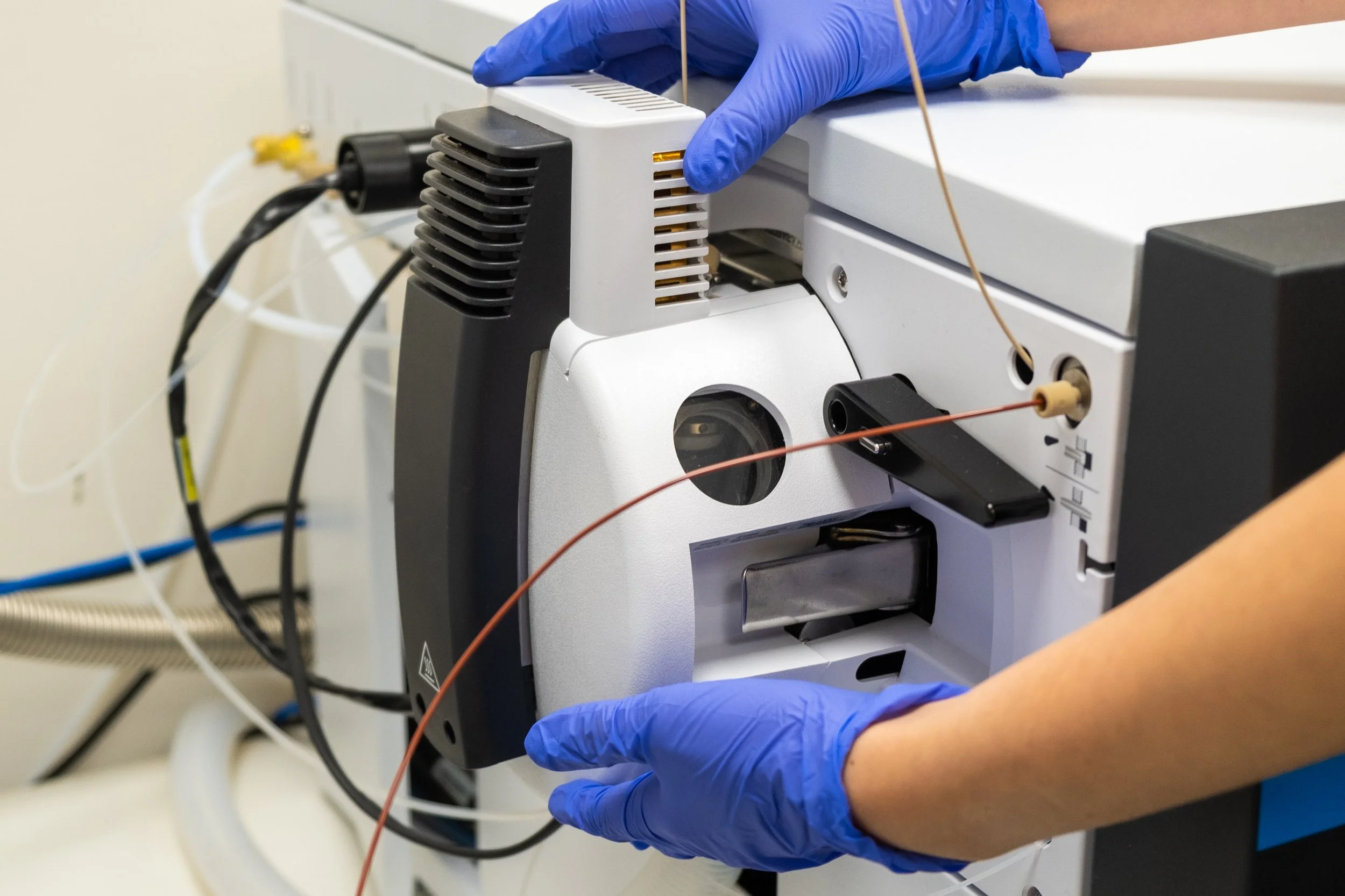
Virtus integrates analytical platforms as part of a unified laboratory system—aligned with workflows, data management, and quality requirements.
Chromatography Suites
Integrated solutions for GC, GC-MS, LC, and UPLC are supported by sample preparation systems, column management, and inventory controls to enable accurate separation, identification, and trace analysis.
Physical Property Measurement Systems
We integrate systems for density, viscosity, flash point, distillation, pour and cloud point, carbon residue, salt, sulfur, and metals analysis—supporting both routine quality control and advanced characterization.
Supporting Analytical Equipment
Laboratories are equipped with precision balances, titrators, pH and conductivity meters, UV-Vis spectrophotometers, FTIR, and elemental analyzers—fully integrated into laboratory workflows and data systems.
-
Informatics is treated as a core laboratory system, not an add-on.
Laboratory Information Management Systems (LIMS)
Virtus integrates LIMS platforms supporting electronic sample intake, automated test assignment, specification checks, result validation, certificate generation, chain-of-custody tracking, audit trails, and role-based access control.
Instrument Integration & Data Management
We enable direct data capture from instruments, real-time system monitoring, electronic laboratory notebooks (ELN), quality trending, secure archival, and controlled data retrieval—ensuring traceability and data integrity.
Regulatory & Accreditation Support
Laboratory systems are designed to support ISO/IEC 17025-aligned workflows, including calibration management, validation records, non-conformance handling, corrective actions, and traceability to certified reference materials.
-
Reliable analytical results depend on disciplined sample management from receipt to disposal.
Receiving & Preservation
We design secure sample receiving, check-in, and storage systems—including refrigerated, frozen, and ambient conditions—supported by documented preservation and time-to-analysis controls.
Sample Preparation
Integrated preparation systems include homogenization, splitting, digestion, dilution, filtration, and centrifugation—designed to ensure consistency, safety, and analytical repeatability.
Inventory & Reagent Management
Virtus integrates standards libraries, certified reference materials, consumables management, gas cylinder tracking, and automated reorder controls—linked directly to LIMS to maintain full traceability between reagents and test results.
Laboratory Design Drivers
Effective laboratory performance depends on disciplined design decisions that balance analytical rigor, safety, compliance, and operational efficiency. Virtus applies system-level design drivers consistently across all laboratory types.
-
Laboratories are designed in alignment with applicable ASTM, API, ISO, and EPA methodologies, safety regulations, hazardous area classifications, and accreditation requirements such as ISO/IEC 17025, as defined by project scope and jurisdiction.
-
Laboratory layouts are structured around analytical precision, hazard segregation, workflow efficiency, and sample integrity. This includes controlled analytical zones, sample handling areas, storage, utilities, and clearly defined classified and non-classified spaces.
-
HVAC, ventilation, compressed air, specialty gases, vacuum, and utilities are engineered to support analytical accuracy, equipment heat loads, hazardous material handling, and personnel safety, with redundancy where required.
-
Laboratories are designed with clean power distribution, UPS-backed critical systems, emergency power provisions, grounding, and classified electrical design to protect sensitive analytical instruments and ensure operational continuity.
-
Secure IT networks, LIMS/ELN integration, instrument data capture, backup and recovery, and controlled data access are embedded into the laboratory infrastructure—ensuring traceability, data integrity, and audit readiness throughout the laboratory lifecycle.
Integrated Analytical Coverage
Virtus designs laboratory systems around the full analytical lifecycle of hydrocarbons—mapping test methods, instrumentation, and crude fractions into a coherent operating framework.
This ensures every laboratory is engineered to support the required analytical depth, data integrity, and regulatory alignment across upstream, midstream, and downstream operations.
